Contributions from the speakers at our latest Faith to Faith dialogue at St Mungo Museum were well considered and thought-provoking, while the questions and discussion from attendees showed a real engagement with the issues.
It was inspiring to witness the consistent thread of the power of community running through the discussions, from the ways in which climate action can flourish from the grassroots to the importance of varied faith communities standing together and supporting climate justice.
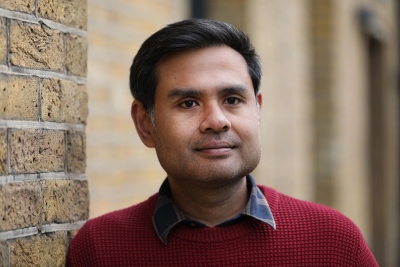
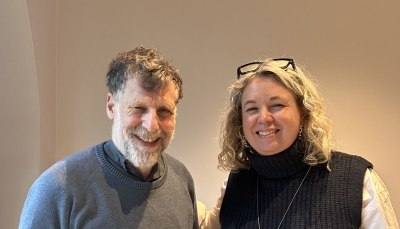
Photo of Shanon Shah by Rehan Jamil
The first speaker, Shanon Shah, Director of Faith for the Climate, reflected on the legitimacy of feeling angry in the face of the injustices caused by climate change, and the lack of action from those with the power to change things. He also raised the important point that how anger is perceived depends on who the person feeling the emotion is, and that we should be aware of how different communities are judged for their emotions.
Next we heard from Elle Steele, a member of Soka Gakkai International. Elle dispelled the misconception that Buddhists are always passive and do not feel anger, explaining the place of anger in Soka Gakkai concept of the “ten worlds” within us all and expressing her own anger at the current climate emergency. Her contribution included discussion of our interconnectedness with our fellow inhabitants of Earth and the natural world, and how this impacts our climate action. In response to a question about who or what we channel anger towards, Elle suggested we consider the shared humanity in all people, and how we can recognise our own experiences reflected in them.
Our final speaker was environmental campaigner and author Alastair McIntosh. Alastair delivered a powerful talk which included the Carlos Castaneda story of Don Juan and how he swam against the current, thrashing in anger and expelling his energy. Alastair posed the question to the audience not only of how we can swim deeper in the climate movement, but learn how to breathe underwater. Alastair shared a lesson from the late Hindu-Christian theologian Raimon Panikkar who had delivered an address in Glasgow back in 1990. Alastair believes these “nine sutras” hold a powerful lesson for our climate action today:
- “one should begin with oneself
- and by oneself (not waiting for the push from one side)
- opening myself to the entire reality
- there, where my self is – Glasgow, not outside
- without forcing the consequences
- in solidarity; solitude is not isolation
- self-motivated; if it is not self-motivated, no motivation would ever work
- non-violently, and
- beginning all over again.”
Feedback from the event showed that participants were overwhelmingly positive about the importance of engaging with people from diverse faiths and cultures on the climate. They found engaging with each other motivational – one participant said “introducing you to people with completely different backgrounds which can challenge your perspective of common sense. Also reignites belief in the goodness of people, which is sometimes hard to find in modern times.”
Participants called for more dialogue events like this to build understanding and awareness, and for more to be shared on social media about what faith communities are doing. Many were also keen to take practical action and suggestions for simple actions will be shared with attendees via email. If you’re interested in learning more please contact Thalia.Groucott@interfaithglasgow.org
One participant reflected that they’d like to see more faith communities engaging with the wider, secular climate movement. This is a view shared by Interfaith Climate Justice Scotland – a working group made up of diverse faith-based organisations active on the climate which is facilitated by Interfaith Glasgow in partnership with Interfaith Scotland. The group came together in the run up to COP26 and is still active today, including as members of Stop Climate Chaos Scotland.
Learnings from this event will be fed back to Interfaith Climate Justice Scotland and we will continue to reflect on them as we continue our work on climate justice.
If you’re interested in coming along to one of our future dialogue events, you can sign up to our newsletter here: https://interfaithglasgow.org/receive-the-latest-news/