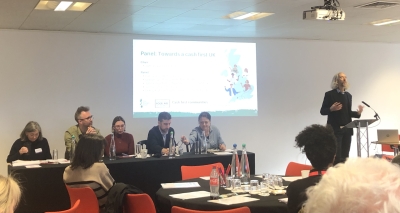
Interfaith Glasgow Project Leader Thalia Groucott, who coordinates the Interfaith Food Justice Network, recently attended The Trussell Trust and Independent Food Aid Network’s second Cash First Communities Conference.
The Interfaith Food Justice Network brings together local community groups – from diverse faiths and none – delivering food projects in and around Glasgow. The network enables them to connect, support each other’s work, and to use their collective voice to push for food justice – which, as the Interfaith Food Justice Declaration says, ensures that ‘everybody can access food with dignity.’
Cash First is an approach to tackling poverty that seeks to prioritise dignity. It is being trialled in Scotland and we were keen to find out more so we could share the learning with our members.
The conference provided lots of opportunities for hearing about how cash first approaches are being implemented at a range of levels, from local councils to money advice to grassroots community projects. The day began with a reminder that currently 1 in 6 people in Scotland are experiencing food insecurity. This is a long way from the Good Food Nation ambition for Scotland as a place where everyone has access to tasty, nutritious, environmentally friendly food. So with this challenge as a starting point, the discussions of the day explored how we can get closer to this vision by providing people with the cash they need to access the things they need.
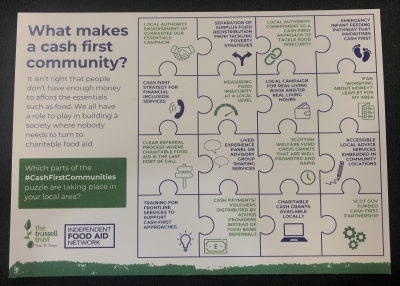
Cash first can mean a range of things, including maximising people’s income from benefits and making sure they are receiving everything they are entitled to, emergency crisis grants like the Scottish Welfare Fund, and more holistic advice services which can address why people might be struggling financially. Frontline food provision services like foodbanks are well placed to signpost people to cash first measures as they are a point of contact with those who need financial support. In its aims to reduce food bank usage and ensure that people can feed themselves and their families with dignity, The Scottish Government is hoping to expand the cash first measures available and the way services refer to them.
The Conference was held in Glasgow, and several developments in Glasgow’s implementation of a cash first approach were mentioned throughout the day. Glasgow is one of eight places in Scotland which has received funding from the Scottish Government to further its cash first work. This is being taken forward by a new Fair Food For All Partnership. Also discussed was the new Glasgow City HSCP Emergency Infant Feeding Support Pathway. This involves more efficient signposting processed and an awareness of the immediate financial supports which are available to families experiencing financial difficulties and unable to afford formula milk. The Independent Food Aid Network also have a Glasgow version of their Worrying About Money Leaflet, which helps people to access cash first measures depending on their circumstances.
A theme from the learnings of different groups who have been taking a cash first approach is how it allows people the freedom to purchase the essentials they need. For example, Aberdeenshire Council found that when providing people with Love Local voucher cards, many chose to spend this at the opticians, even though this was something they hadn’t anticipated at the launch of the initiative. This reflects the point which was also present throughout the conference; we can distinguish between food poverty and fuel poverty to reflect a particular issue, but ultimately we are just talking about poverty, and cash first is a direct way to address this.
Another consistent theme was the importance of successfully signposting people to services which can help them, while being mindful of the emotional drain on people and the challenge of having to share their story multiple times. Those who work frontline in food provision services will likely be familiar with how you get to know those who use the service and may develop a rapport as such that they feel comfortable to share elements of their struggle with you. A trauma informed approach would tell us that just because someone has felt comfortable sharing with one service, this doesn’t mean it will be easy to seek help from another. Aberdeenshire Council’s Welfare Team uses what they call a ‘warm handover’, where they can directly link with the service they are signposting someone to and set up a meeting. When they have permission to share information about what support is needed, this can make it more straightforward for people to access the help they need. Processes like this, where we can ensure that people are not falling through the gaps, are the way to successfully support people to use the services they need and are entitled to.
A challenge to successfully implementing a cash first approach is often the resistance people feel to paying out money, particularly with the perception that people can’t be trusted to spend it on the “right” things. Aberdeenshire Council’s lived experience panel have shared that if there was one thing they would change, it’d be how they’re treated by organisations, and that they’d like to be treated like people. Whatever someone is going through, we must remember that anyone could be in that position were their circumstances to change. Cash first is about dignity, choice, valuing people and trusting them to know how to best meet their own needs.
The concluding remarks from Polly Jones, head of The Trussell Trust in Scotland, included a reflection on the need to undertake inclusive and wide-reaching work to make sure that disabled people and refugees and asylum seekers are better able to access cash first services. This is because these groups may be underrepresented in the groups where this work is taking place, or in the case of refugees and asylum seekers, have no recourse to public funds. Like many initiatives with a campaigning element, proponents of cash first work are now looking towards the general election and getting cash first on the agenda throughout the UK. While the Scottish Government are taking steps to end the need for foodbanks and take a cash first approach nationally, Jones argued that is important to continue to advocate for a cash first approach at a range of levels.