This Autumn, Interfaith Glasgow (IG) delivered three dialogue events exploring the meaning of climate justice and the ways in which it intersects with other crucial justice issues. Made possible through Lottery funding, these events explored climate justice through the lens of food, gender and finance.
Diverse faith and belief communities are already active in supporting people affected by unjust systems but they’re not always aware of how these injustices relate to, and stand to be exacerbated by, the climate crisis.
The “Climate Justice is…” series provided an opportunity to deepen our understanding, exploring in some detail the various dimensions and demands of climate justice; and how we can come together to take transformative action.
We partnered with inspiring organisations whose work we admired from afar and some of whom we’d already worked with before to explore Food Justice with Nourish Scotland, Gender Justice with Women’s Environmental Network and Financial Justice with Faith for the Climate and Quakers in Britain. The fact that the dialogues were online meant that attendees joined from all corners of the globe, from Glasgow, Scotland, Europe, Africa, the Americas, Asia and Oceania. Each event included speakers from both the Global North and Global South who brought a deeper understanding of the issues and how they intersect with not just food, gender, financial justice but also with racial and migrant justice.
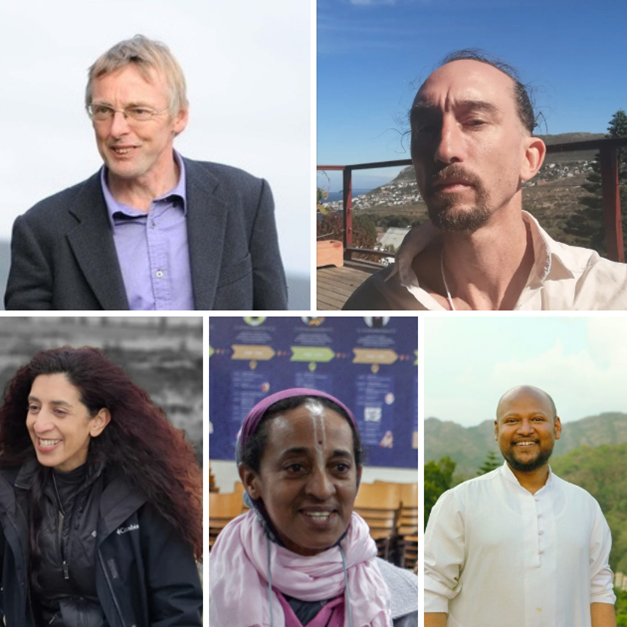
At “Climate Justice is Food Justice”, participants gained insights into the nature of our complex global food system which is driven by profit at the expense of the welfare of workers, the land and animals – as well as being a key source of carbon emissions. ISKON Scotland shared their exemplary model of sustainable food growing practices intimately linked with people, community and earth care. Participants heard an argument for de-commoditizing food and had the opportunity to reflect and dialogue on the complexity and the lack of compassion in the food system. As a result, our audience committed to actions such as supporting local food producers, growing vegetables, raising awareness about processed food and eating more plant-based food.
The speakers were (from top left to top right) Pete Ritchie – Executive Director, Nourish Scotland; Florian Kroll – Food Systems Researcher and Facilitator, University of the Western Cape, South Africa; (from bottom left to bottom right) Zarina Ahmad – Climate Change Communicator and Researcher, University of Manchester; Vrinda Watson – Krishna Eco Farm, International Society for Krishna Consciousness Scotland; Shantanu Mandal – Facilitator for Environment and Faith, United Nations Environment Programme, India.
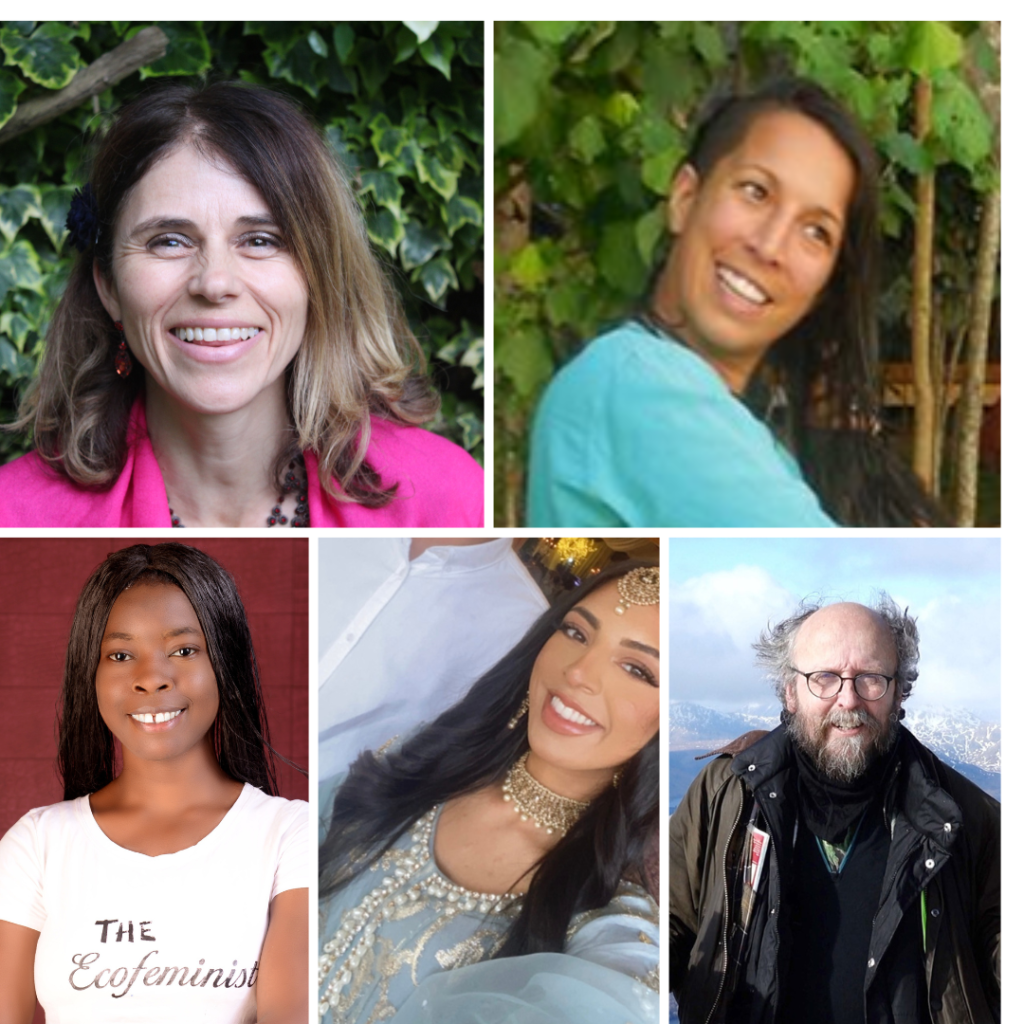
Women’s experiences have historically been marginalised and have tended to be overlooked within climate change discourse. Our event “Climate Justice is Gender Justice” highlighted:
- How women are disproportionately affected in the environmental crisis due to structural gender inequality, which further intersects with inequalities of race and disability
- Injustice and patriarchal structures at the heart of the global economic system, which is driving climate breakdown
- Examples of fantastic work, which seeks to include women in climate solutions such as Wen’s feminist New Green Deal, Adenike Oladosu’s
The speakers were (from top left to top right right) Kate Metcalf – Co-Director, Women’s Environmental Network, London, England; Roshini Thamotheram – Campaigns Project Coordinator, Women’s Environmental Network, London, England; (from bottom left to bottom right) Oladosu Adenike – Founder of I Lead Climate Action Initiative, Ecofeminist, Ecoreporter & Climate Justice Leader, Nigeria; Aniqah Ali – Podcaster / Interviewer and Climate, Racial and Gender Justice Activist, Glasgow, Scotland; Rev David Coleman, Environmental Chaplain, Eco Congregation Scotland.
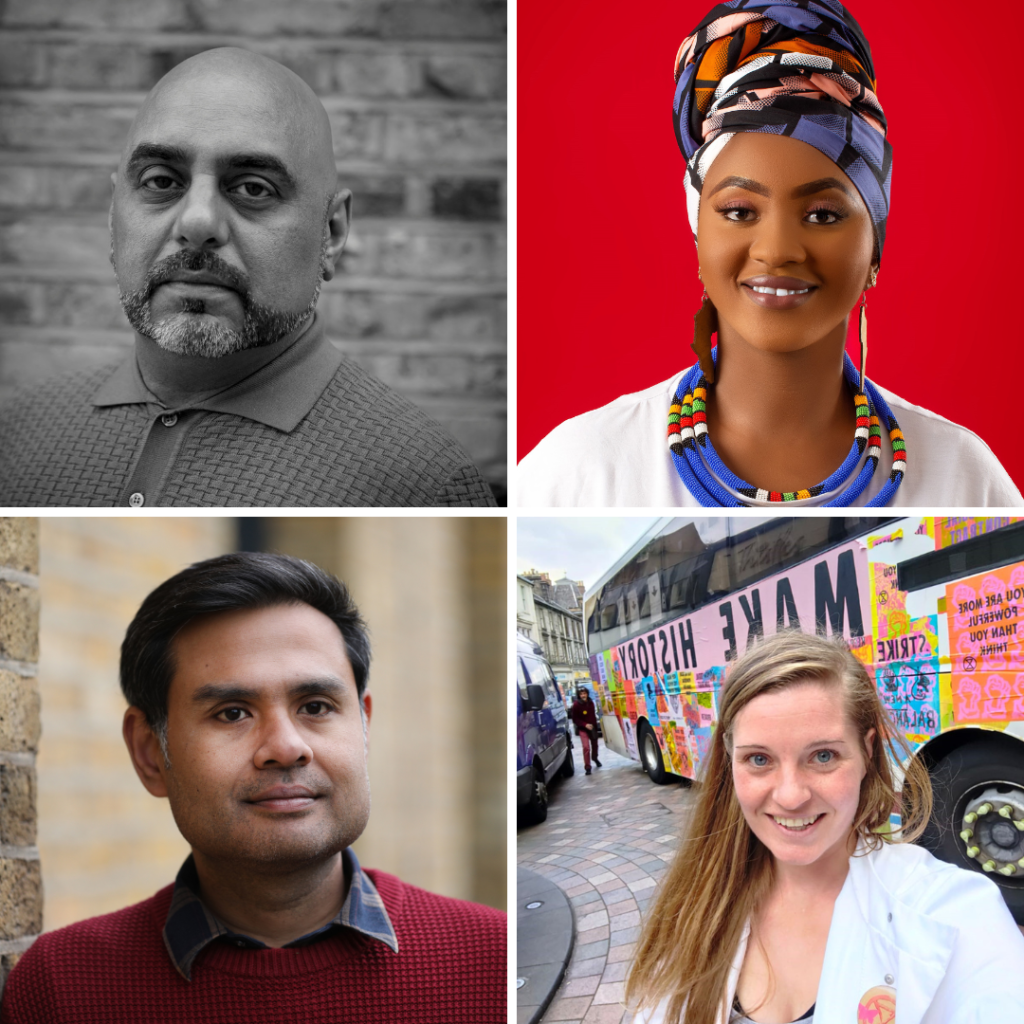
Our final event explored financial justice, and taking place shortly after the COP27 summit, speakers reflected on how the COP27 negotiations were both a step forward (for loss and damage) and a huge disappointment (on everything else). Asad Rehman of War on Wont laid bare the deeply embedded colonialist structures within our financial and economic systems, which have been developed at the expense of countries in the Global South. Abigael Kima, Climate Activist and Host of Hali Hewa Podcast shared how Africa is responsible for less of 4% of global emissions and only 0.5% of the historical emissions and yet faces multiple climate disasters. Far from receiving the reparations required much of the continent is crippled by debt. Abigael made attendees aware of the impact of climate breakdown on indigenous communities in Kenya and the importance of sharing and telling personal climate stories. You can hear more on this topic in her podcast series here Dr Shanon Shah of Faith for the Climate spoke about Loss and Damage finance as a focus for the activist work of the Make COP Count Group targeted at the UK Government in support and solidarity of the Global South. Dr Shah talked about the importance of telling it how it is: sharing the stories of real human beings and their losses as a way to cut through the technical language surrounding Loss and Damage. Speakers also shared how they have found the Polluters Pay Principle helpful in communicating the argument for loss and damage financing: “if you broke it, you pay for it”.
The speakers were (from top left to top right) Asad Rehman – Executive Director, War on Want, UK; Abigael Kima – Climate Activist, Host and Producer Hali Hewa Podcast, Kenya; (from bottom left to bottom right) Shanon Shah – Director, Faith for the Climate, England; Jennifer Newall – Co- Founder of Trees For Birthdays, Scotland.
Each dialogue included a spiritual reflection facilitated by Shantanu Mandal of Brahma Kumaris India for the food justice, Reverend David Coleman of the United Reformed Church for the gender justice dialogue and Jennifer Newall, founder of Trees for Birthdays. Dialogues also provided facilitated breakout room discussions where people of faith and none were able to meet one another and unpack the information shared. Guided by our breakout room guidelines and good practice for dialoguing, attendees heard other points of view and new ideas, some becoming connected to local initiatives and how they could become involved. There was knowledge sharing, friendship building, fellowship and solidarity. Resources such as Climate Outreach’s Britain Talks Climate, Quakers in Britain climate & economic justice resources, Faith for the Climate faith resources and ACT Climate Labs were shared as a way to access reliable information, engage the public about the climate justice issue and a starting point for those who want to have conversations with others who share different opinions and have different information about climate action.
Participants experienced an increased sense of solidarity with others, empowerment to take action, motivation to engage further in climate justice-related activities, explore how their community could take action and make lifestyle changes.
Speakers from diverse faith and belief backgrounds ended each event with a spiritual reflection on the theme and sharing insights including on the importance of seeing the bigger picture and we are all interconnected and interdependent and how self-transformation brings hope for world transformation.
For more information about our climate work, please contact Satya Dunning, Project Leader at Satya.Dunning@interfaithglasgow.org.
This dialogue series was made possible through funding from the National Lottery Together for Our Planet fund.